Blush Response meets Gliss
Gesture and performance for industrial usage
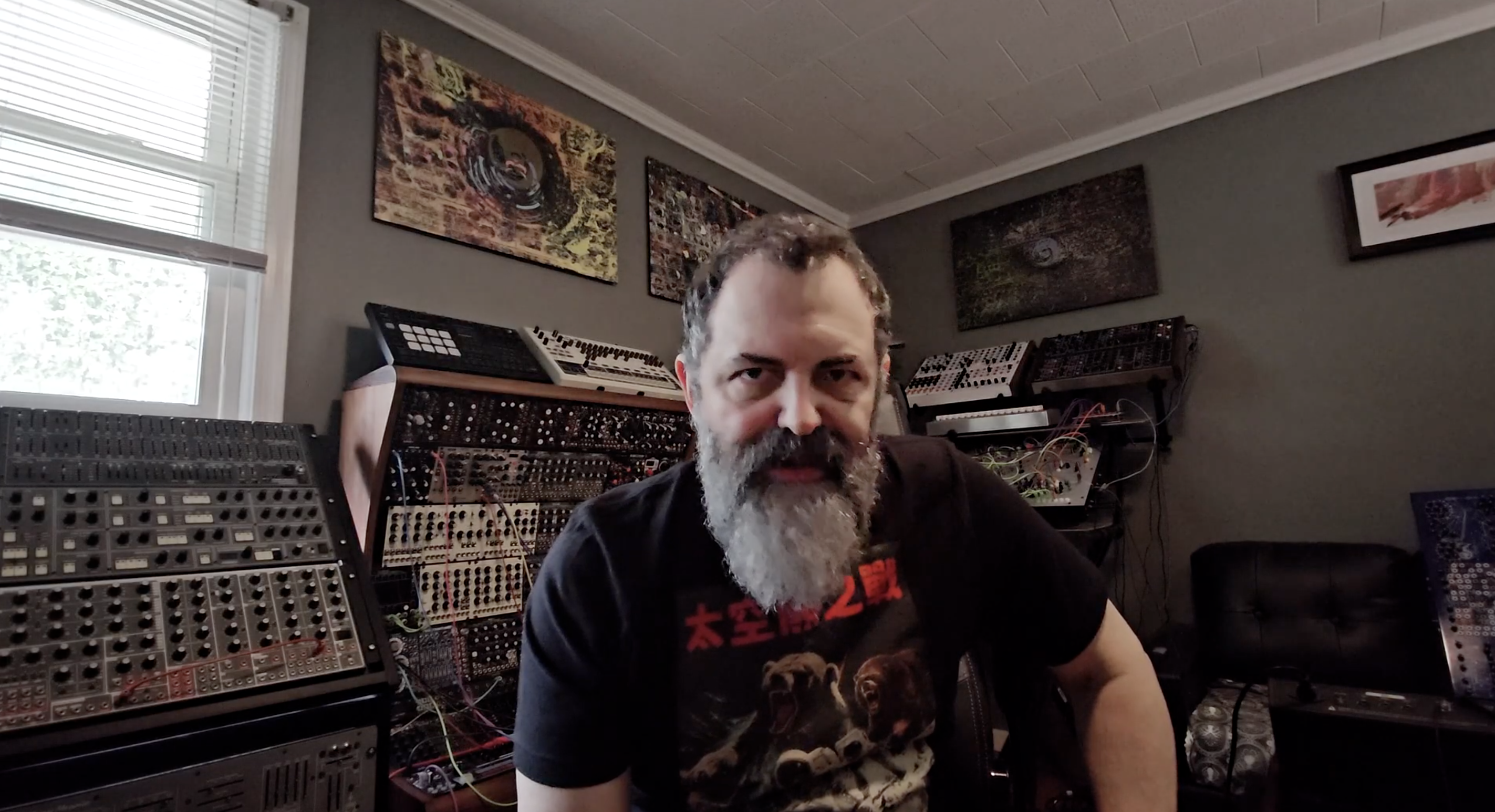
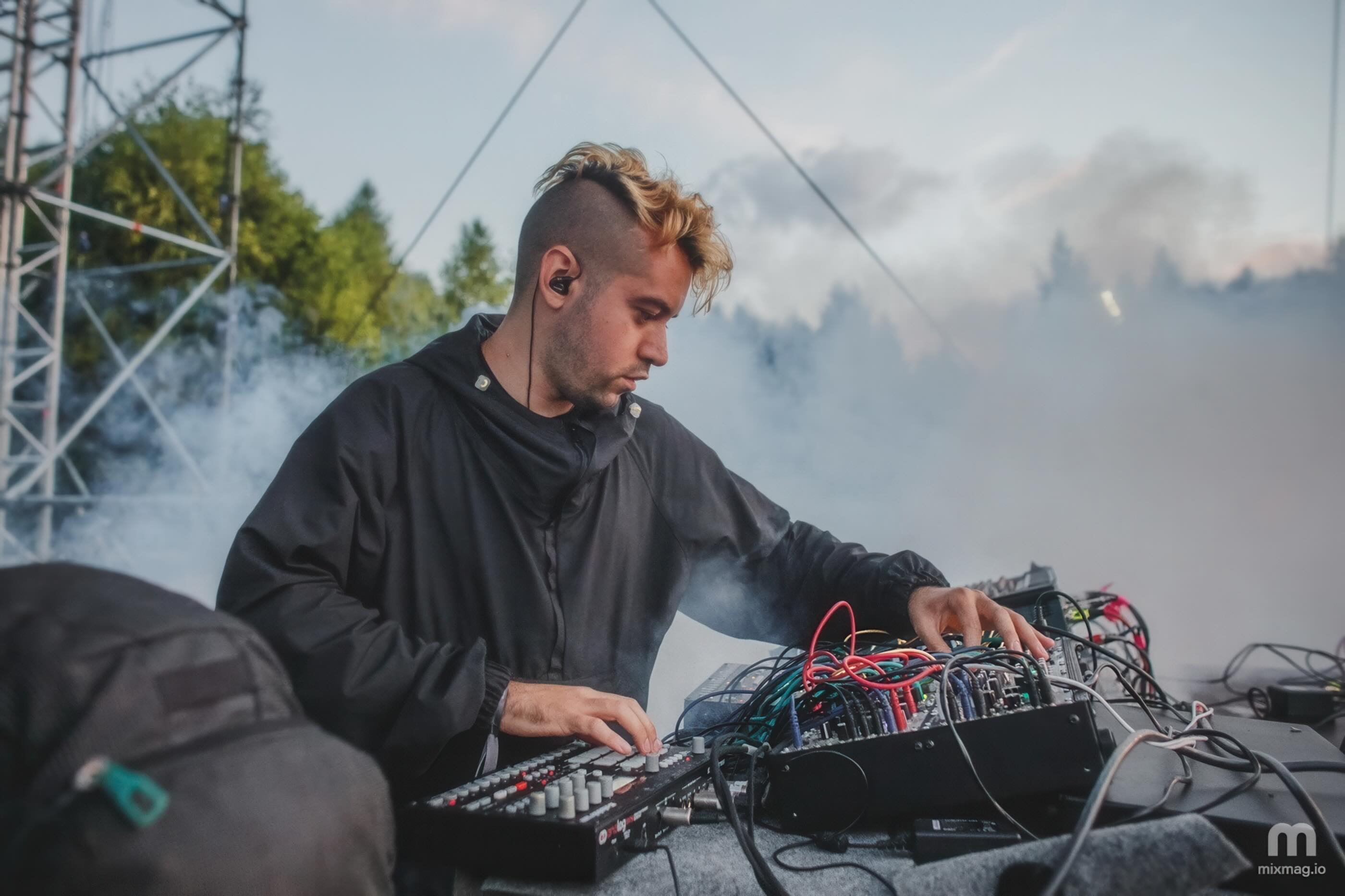
Joey Blush, aka Blush Response, is a modular synth performer both solo as well as in the trio Front Line Assembly. Gestural control played a key role in his modular set-up, allowing the Berlin-based industrial and EBM techno producer to infuse his live sets with physicality and movement in a way that most modular setups don’t. In this conversation, he reflects on how Gliss entered his workflow, from touring constraints to improvisational performance.
Where are you from originally – and how did you get into electronic music?
So obviously I’m Joey. I go by Blush Response. I was born in Miami. My family’s from Cuba. They were refugees, they escaped. I’m the freedom baby. I lived in Miami until I was about 15. Then my family moved to upstate New York because my stepdad got a new job.
I suddenly had a lot of time on my hands. It was a very small town – population maybe 3,000 – and the culture shock was real. Winter, snow, isolation. At the time I was really into electronic and industrial music – Prodigy, Orgy, Depeche Mode, Skinny Puppy, all that. I just thought, alright, I want to try this.
I had taken piano lessons for a couple of years, but I hated it. But a synthesizer is still a keyboard, so I figured I could play that. Then I got a MicroKorg, and here we are. I’ve never recovered from that moment.
So you’ve had Blush Response as your main umbrella for a long time. Have you had other aliases or side projects along the way?
Blush Response is my only thing. I’ve done collaborations over the years – a project called Hakai, Drax Response with Thomas Heckmann, another one called Konkurs, and a few others.
Those all had different project names because they were tied to specific people. Eventually I stopped doing that because people would come up to me and say, “I didn’t know you did this,” or “I didn’t know you were part of that.” It started fragmenting things.
Now if I do a collaboration, it’s Blush Response and whoever – a joint record. Who knows if it’ll even happen more than once.
I should also mention that I toured with Joey Jordison from Slipknot in his band Scar the Martyr, where I played synths. And I’ve been in Front Line Assembly for a few years now. Those are the main things alongside Blush Response.
When did you first hear about Bela – and was Gliss the entry point?
Yeah, Gliss was the entry point. I have a Patreon, and one of my Patreon members kept talking about it.
With Front Line, what I do is a lot of improvisation. I wanted to bring my Soma Terra and my modular system on tour, but logistics-wise I could only bring one thing. Space, cargo limits, all that.
So I asked myself how I could bring some of that sensitivity and control into the setup. Then I remembered Gliss. I reached out to you guys, and that was it.
How many Gliss units are in your setup now?
I have three. And then a friend gave me one, so I have four total.
Did it immediately feel useful once you started using it?
Yeah, immediately. It did exactly what I wanted it to do: on-off touch control, more hands-on playability.
There’s also something about how it looks. Tapping something looks dynamic on stage compared to just tweaking knobs. So it’s the whole package. I use it in the studio too – I was working on a new song yesterday and used it there as well.
A lot of modular performance ends up being very small gestures. What does Gliss change in that respect?
It looks like playing. You can come in and out and do things in a way that feels more physical and dynamic.
Do you think of individual modules as instruments themselves, or as part of a larger instrument?
I see them as part of an instrument.
I was working on a new track recently with this really aggressive synth sequence that almost sounded like a guitar. I wanted to bring in two extra layers of that same riff, but filtered differently. Instead of reaching around and adjusting three filters, I just used Gliss. Boom – it’s in, it’s out, it’s in again. I could even do cut-ups just by tapping.
In that sense, it brings everything together.
Does it affect how you think about phrasing or dynamics?
Yeah, because it’s much more like playing an acoustic instrument than working with a sequencer. I can come in and out whenever I want. I’m the amp envelope, I’m the filter envelope.
If I have a few Gliss units controlling one sound, I can do all kinds of morphs and mutations that just aren’t possible otherwise. I put three next to each other and I’ve got three fingers controlling things at once. That kind of articulation is impossible with knobs. For certain things, it’s absolutely better.
Can you describe a typical live patch, especially when you’re touring with Front Line Assembly?
It changes all the time, but live with Front Line I usually have one Gliss controlling a master filter – the Endorphin.es Ghost. When I’m not touching it, the filter is completely closed and the sound is muted. I touch it, the filter opens, sound comes through.
Another Gliss controls the macro slider on the Intellijel Multigrain, mainly because that slider is pretty sensitive live. I move around a lot on stage and didn’t want to break it. The third one controls effects coming out of the 4ms MetaModule.
With Front Line you’ve got a singer, drummer, keyboards, backing tracks, and then me. I didn’t want to be doing too much. I wanted to come in fast, do something dynamic, and then mute immediately if needed – or keep it open by holding the touch point. Exactly like an acoustic instrument where you can start and stop whenever you want.

Was gestural control part of your modular approach before Gliss?
I’d always looked at Buchla touch plate controllers, like the 223e, and thought they were interesting. But they’re expensive, and I always wondered what I’d actually use them for.
Gliss gave me a way in. Once I started using it, I completely understood the concept. Now I can’t live without it. I use it in almost every patch. Sometimes it’s a macro controller moving four things at once with stackables. There are a million ways to use it, and I throw it in whenever I can.
Has it pushed your music in new directions?
Absolutely. It adds a whole new layer because it’s so interactive.
For about ten years I was very sequencer-based and almost anti-playing. I’d played keyboards in bands and wanted to get away from that, focusing instead on sound and texture. Recently I’ve come back to playing – deliberately playing melodies, deliberately introducing parts.
Gliss gives me that control. It lets me be intentional again.
Do audiences actually see what you’re doing with it on stage?
Yeah, they do. I tape the modular down to a stand and I move it around – rock it, tilt it forward – so people can see my hands touching it. They see the lights, they see the movement. I don’t know if they fully register what’s happening, but they can tell something physical is going on.
Any accidental stress tests on tour?
I dropped it a couple of times. Gliss was fine. I broke another module – twice – but I had backups.
Has using Gliss changed how you think about composition more broadly?
My taste has shifted. I spent years focused on live jams and sequencer-based recording. Now I’m back to songwriting – riffs, melodies, structure. My last album Ego Death was like that.
The track I mentioned earlier only exists the way it does because of Gliss. Without that performance control – bringing layers in, filtering them dynamically – it would sound completely different. You can really hear the levels building, and all of that is touch control.
Any final thoughts for people who haven’t explored touch control yet?
People should explore it more. It’s easy to get lost in tweaking knobs, and that’s great, but touch control adds another layer you might not even realize you’re missing.
Now I can’t be without it. I sometimes think about stripping everything down to one case, and Gliss is always in there. Once you have that element, it’s really hard to give it up.