Talking Tangible Musical Interaction with Jens Vetter
Touch, tension and sonic cartographies
Jens Vetter’s work occupies a unique space between sound art, instrument design and tangible interaction research. Over the past decade he has developed a distinctive body of interactive installations and musical interfaces that explore the relationship between movement, touch and sound.
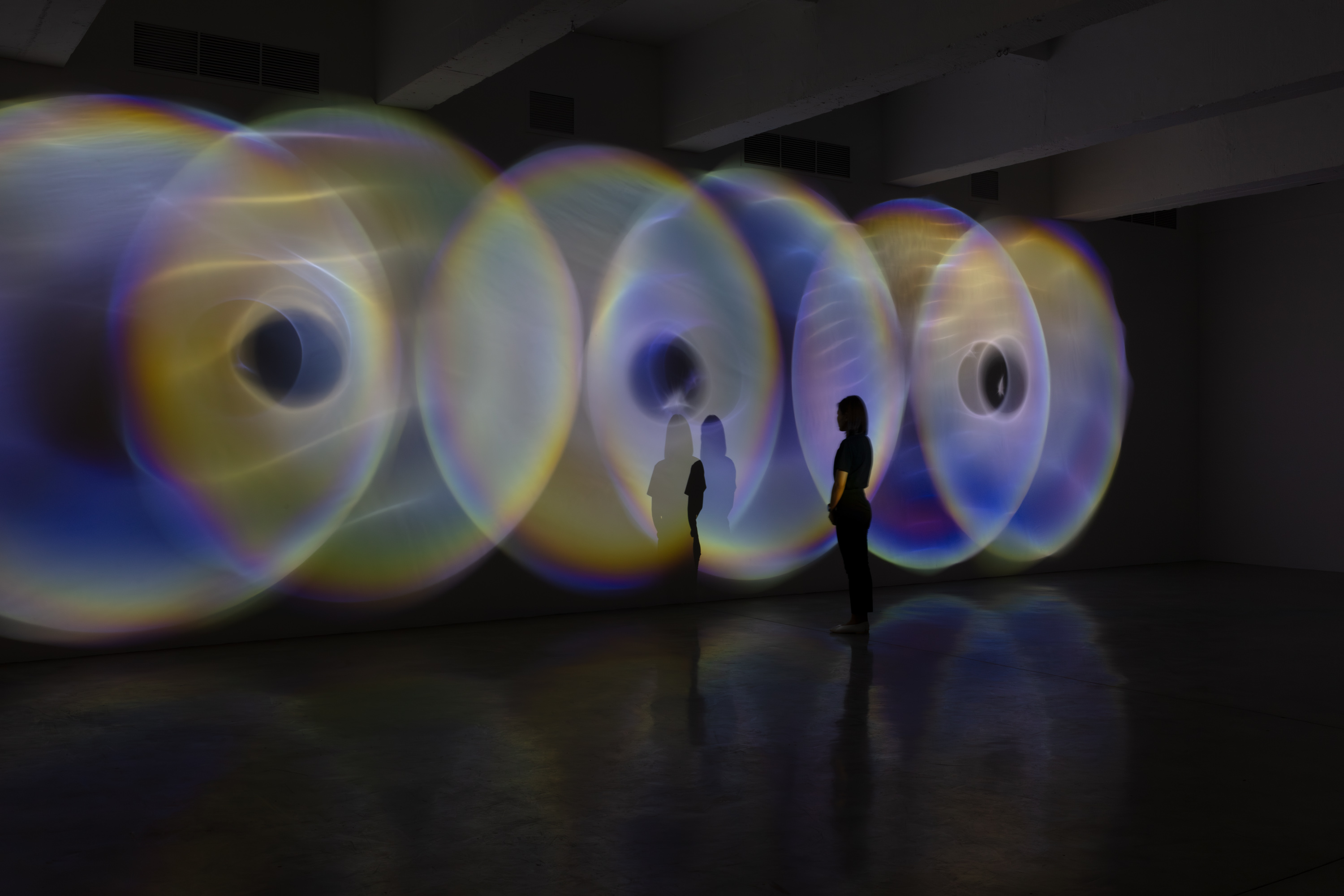
Two recent projects, Spannung and Atlas, beautifully demonstrate this approach. One transforms tension and elasticity into an instrument; the other uses a steering wheel to navigate an imagined sonic landscape. Different in form, both invite audiences to discover sound through intuitive physical interaction.
At the heart of both works is a simple question: how can an everyday object become an expressive musical interface? Whether leaning into an elastic wall of tensioned belts or steering through a landscape of rustling paper, the interaction feels immediate and embodied. The technology quietly disappears, allowing the physical experience to take centre stage. Hidden inside both installations is a Bela board running SuperCollider, providing the responsive audio engine for these interactions.
Spannung and Atlas are just two projects within a wider practice spanning sound art, experimental performance, accessible music technology and custom instrument design. Through installations, performances and research, Jens continues to challenge conventional ideas of what a musical instrument can be, often blurring the boundaries between sculpture, installation and performance.
We caught up with Jens to talk about his path into tangible musical interaction, the ideas behind Spannung and Atlas, and why designing expressive physical experiences remains central to his artistic practice.
In conversation with Jens Vetter: from performance to tangible interaction
Your projects often invite people to physically explore sound through pulling, rotating, stretching, or touching objects. What first drew you towards tangible musical interaction?
I worked for many years as part of an artistic duo with the sculptor and performer Sarah Leimcke. We didn’t have the money for expensive equipment or ready-made solutions, so we developed and built everything ourselves. That was when I first began exploring wearable interactive costumes, sound objects for the stage, and the translation of gestures into music. Together, we developed numerous performances, which were then presented at arts festivals, on concert stages and in public spaces. We performed as human flies on floating pontoons, cooked food live on stage, and marched around in clattering sound armour.
To learn more about building musical instruments, I started studying at the Interface Cultures department at the University of Arts in Linz, Austria, where I first came across the term “tangible interaction”. There were some incredibly fascinating people working in that department. Besides media artists Christa Sommerer and Laurent Mignonneau, I mainly attended courses taught by Martin Kaltenbrunner, one of the developers of the Reactable, as well as by sound artist Enrique Tomás. It was there that I began building interactive objects and sound installations, which did not necessarily have to be part of a performance.
Later, at the Tangible Music Lab, I also conducted an academic research project investigating how computer music could be made more accessible to visually impaired and blind musicians within the context of inclusive music technology and tangible musical interaction.
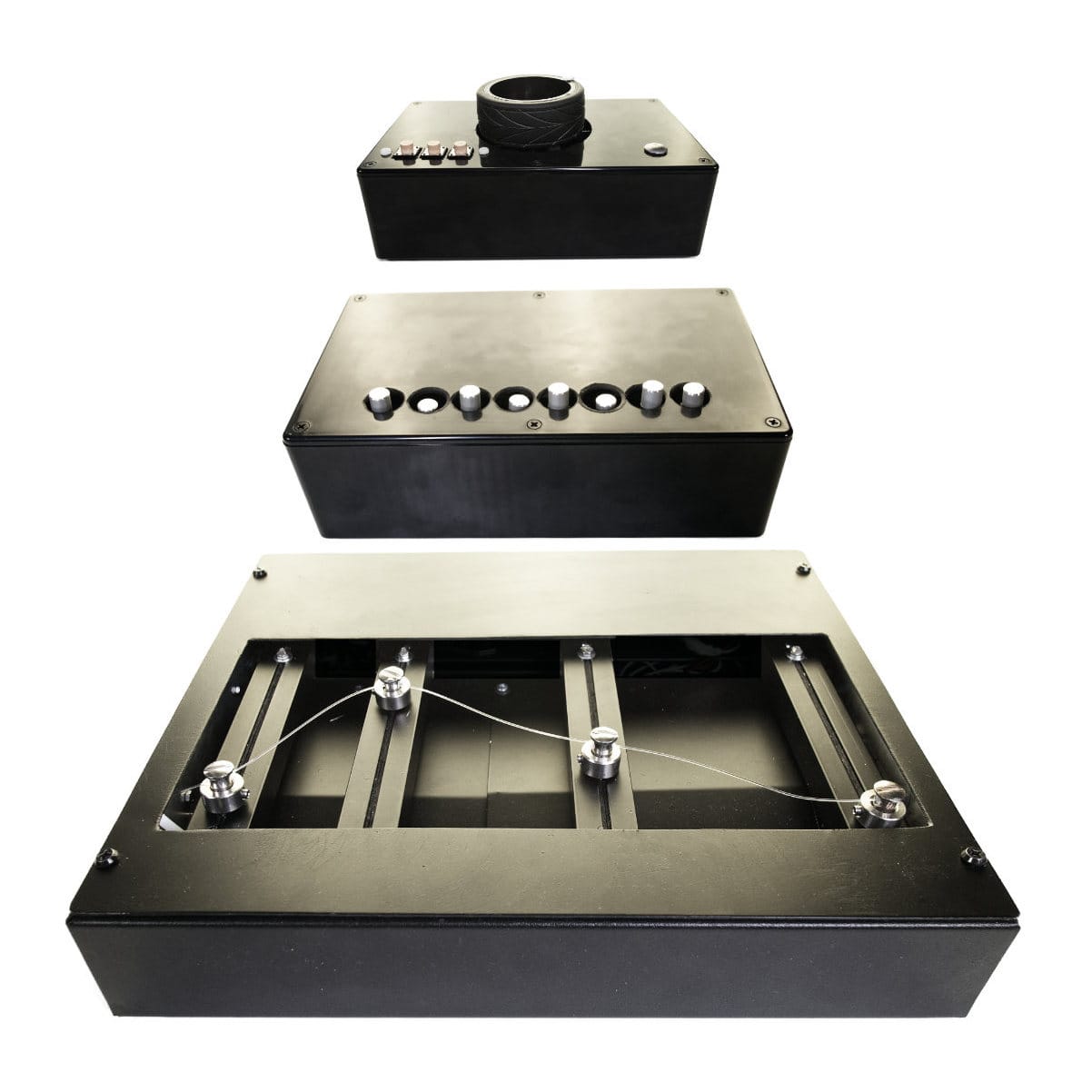
A collection of tangible interfaces created by Jens.
Musical objects and legible gestures
You are a musician, as well as someone who constructs these sculptural devices. Can you tell us a bit about your musical background and how your musical culture blends into your design work?
I am a self-taught multi-instrumentalist and have been playing the piano, guitar and drums since my youth, often in bands and on stage. Later on, I explored electronic instruments such as modular synthesizers, samplers, the theremin and, more recently, live coding on the computer. When I think about developing new instruments, I actually always consider them from the perspective of the stage — that is, how the performance feels and how it looks to an outside observer.
In general, I think it’s important that the audience can understand what’s happening with the instrument. Like how and why certain sounds are being produced right now, or to what extent a performance is live or rather just playback. In my artistic work, this focus on clearly communicating musical interaction has really taken on a life of its own. I love grand gestures and expressive, performative movements. For example, I built a large spider’s web that generates sound when someone gets “caught” in it and stretches the individual strings. Similarly, in the work Kabelsalat, you can produce theremin-like sounds by squeezing the cables together tightly with your hands.
When it comes to the aesthetics of the objects and instruments, I often make a conscious effort to avoid conventional or familiar designs. It shouldn’t look like a musical instrument, nor does it necessarily have to be practical or comfortable to play. On the contrary, I often use form as an artistic language in its own right, one that addresses themes beyond sound production — as, for example, in the installation Gratulation, where you can touch oversized trophies, triggering a sound and, immediately afterwards, a round of applause. I like these metaphors. I am constantly inspired by everyday observations and objects.
Between instrument, installation and sculpture
A lot of your projects seem to sit somewhere between instrument, installation, and sculpture. Do you consciously think about those categories when developing new work?
That’s a good question. At first glance, these categories appear to be distinct from one another. However, many instruments, such as the organ or the piano, are simultaneously an instrument, an installation and a sculpture. Categorisation often seems to be more of a reference to the context than a definition of the instrument itself. In any case, I feel at home in all these categories, and when working on new artistic projects, I definitely try to blur the lines between them. I enjoy thinking about forms and site-specific installations, but I also love it when things can be touched and then, for example, produce sounds or set mechanisms in motion. I think one of the main reasons I jump back and forth between art, music and instrument development is the fact that I get bored easily and constantly want to keep myself entertained.
My approach is slightly different when I’m developing instruments for the stage, though. I mainly play improvised sets, experimental proto-techno. For that, I want to use an instrumental setup that packs as much functionality as possible into a small space, so that I can be flexible and have as much fun as possible during live shows. I use a small modular system with synths, samplers, effects and a sequencer, which provides everything I need to improvise. I think a modular system is, in a way, also a kind of self-assembled instrument. Another musical tool for live performances is the accessible live coding platform Welle, which I developed during my research project, and which I’ve found to be surprisingly well-suited for experimental performances in clubs and at festivals.
Designing Spannung and Atlas
Spannung and Atlas both feel very immediate and physical, but in very different ways. How do you approach designing interaction for a new piece? Where do you start?
When it comes to interaction design, I’m very interested in finding new and unusual ways to generate sounds and interact with them. In this context, I always think of interaction in terms of the body: as a performative and physical act. But interaction design is rarely the starting point for a new piece of work, it often emerges as part of an overarching artistic concept.
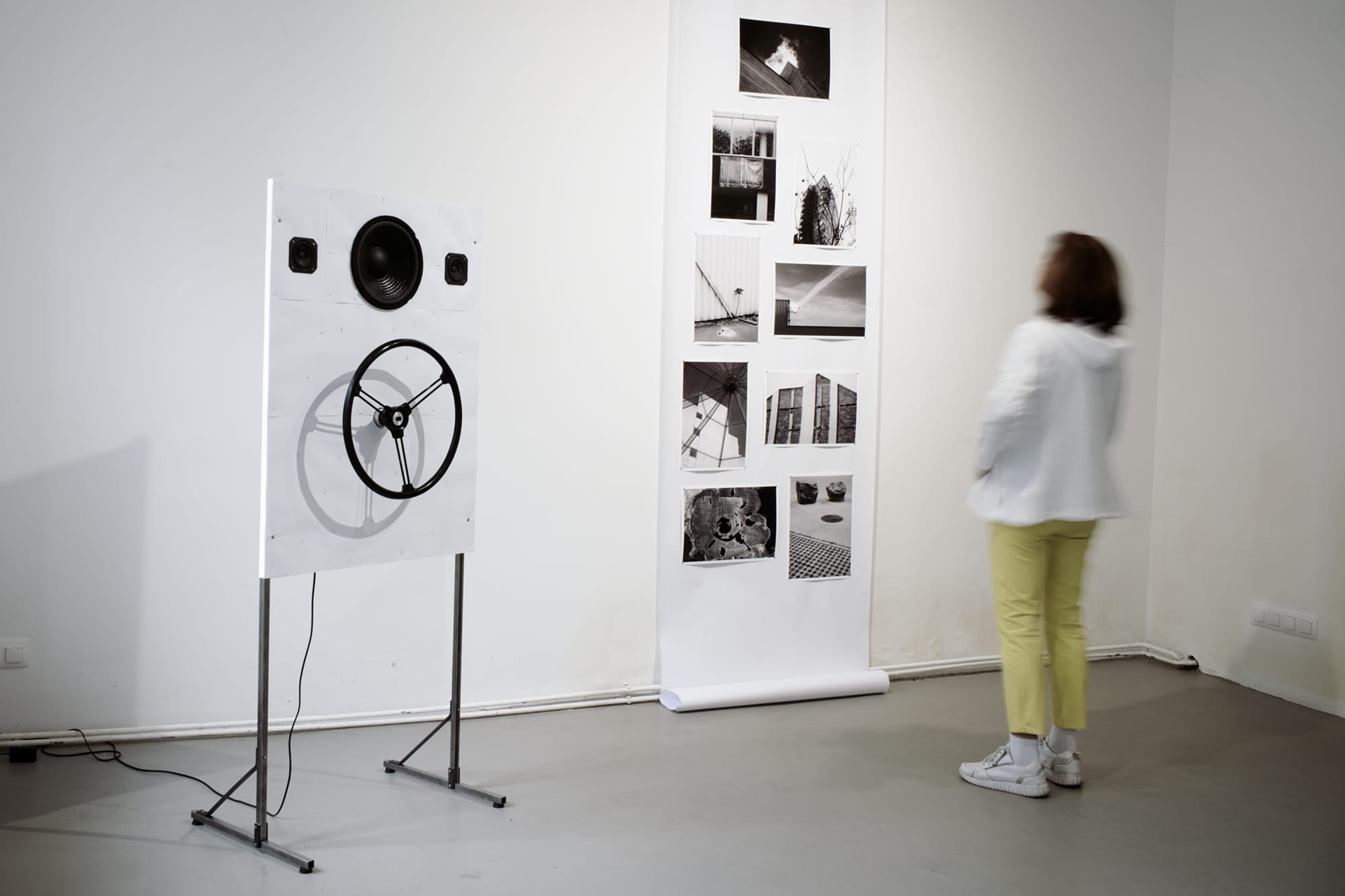
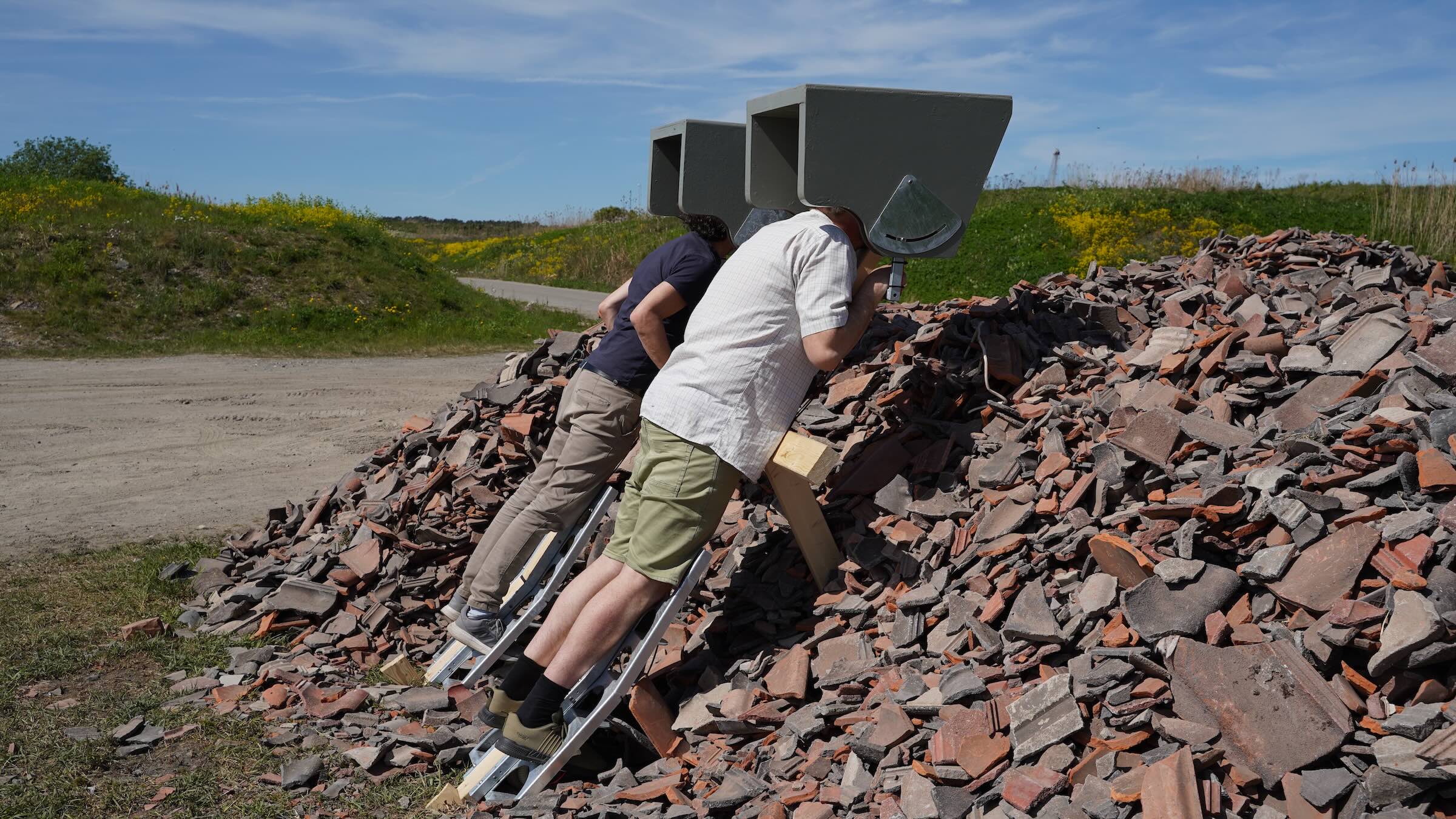
Atlas as exhibited.
For instance, I developed Atlas as part of a series of works focusing on urbanity and the city. I figured that, with the steering wheel as an iconic element of interaction, one could also navigate through abstract cities or soundscapes. This then evolved into Atlas, including a very prominent positioning of the speakers, effectively as a substitute for the windscreen. Its soundscape is a high-resolution recording of paper rustling and crackling, a reference to urban rubbish in dark alleyways. The playback can be controlled using the steering wheel, and the audio can be sped up, slowed down, or reversed completely. The installation is, of course, scaled up, and one could also control the playback of the sounds using a mouse or a small MIDI controller, but Atlas does produce a special experience that one might not be able to achieve with just a small fader.
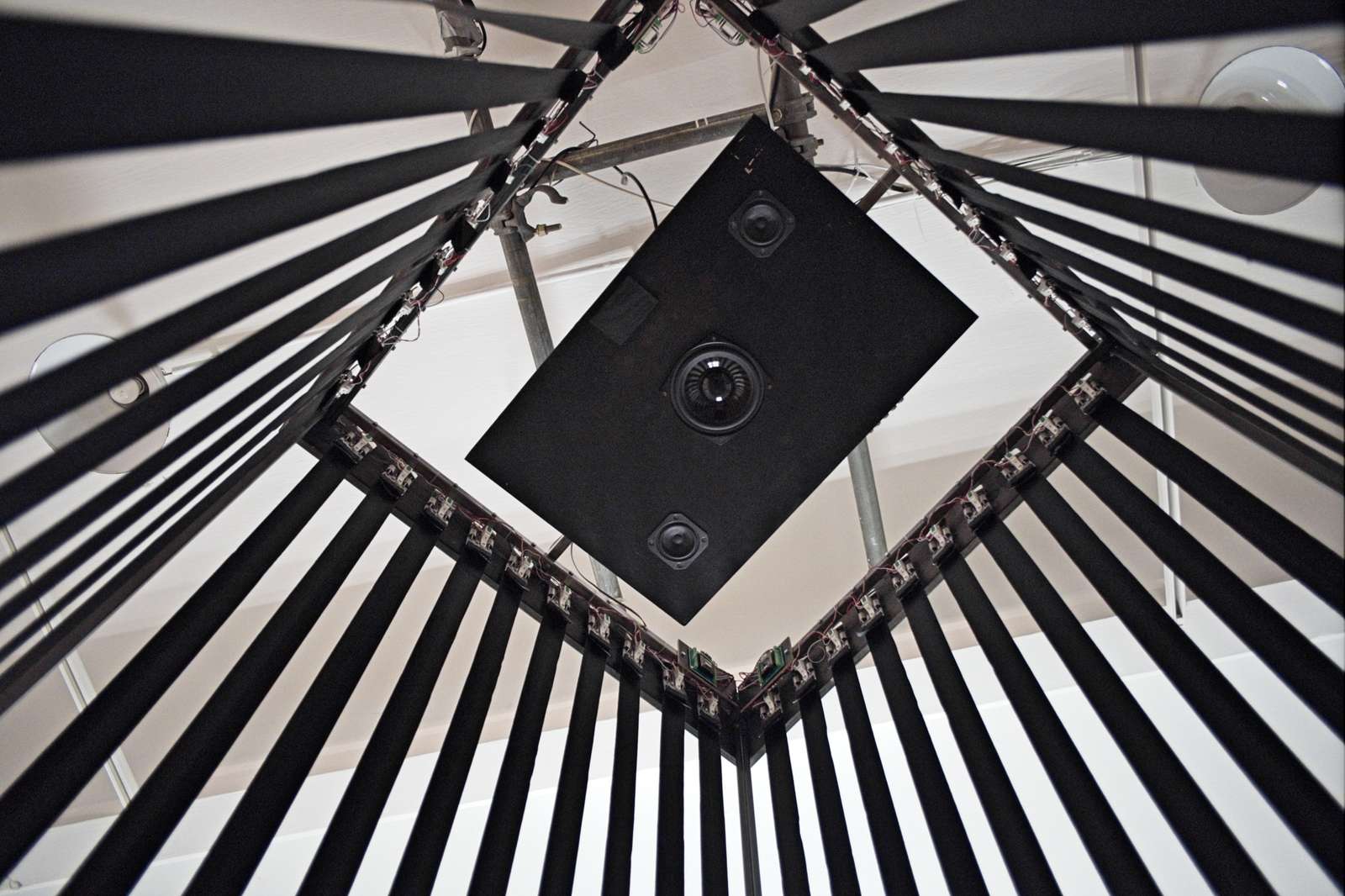
Spannung detail of speakers.
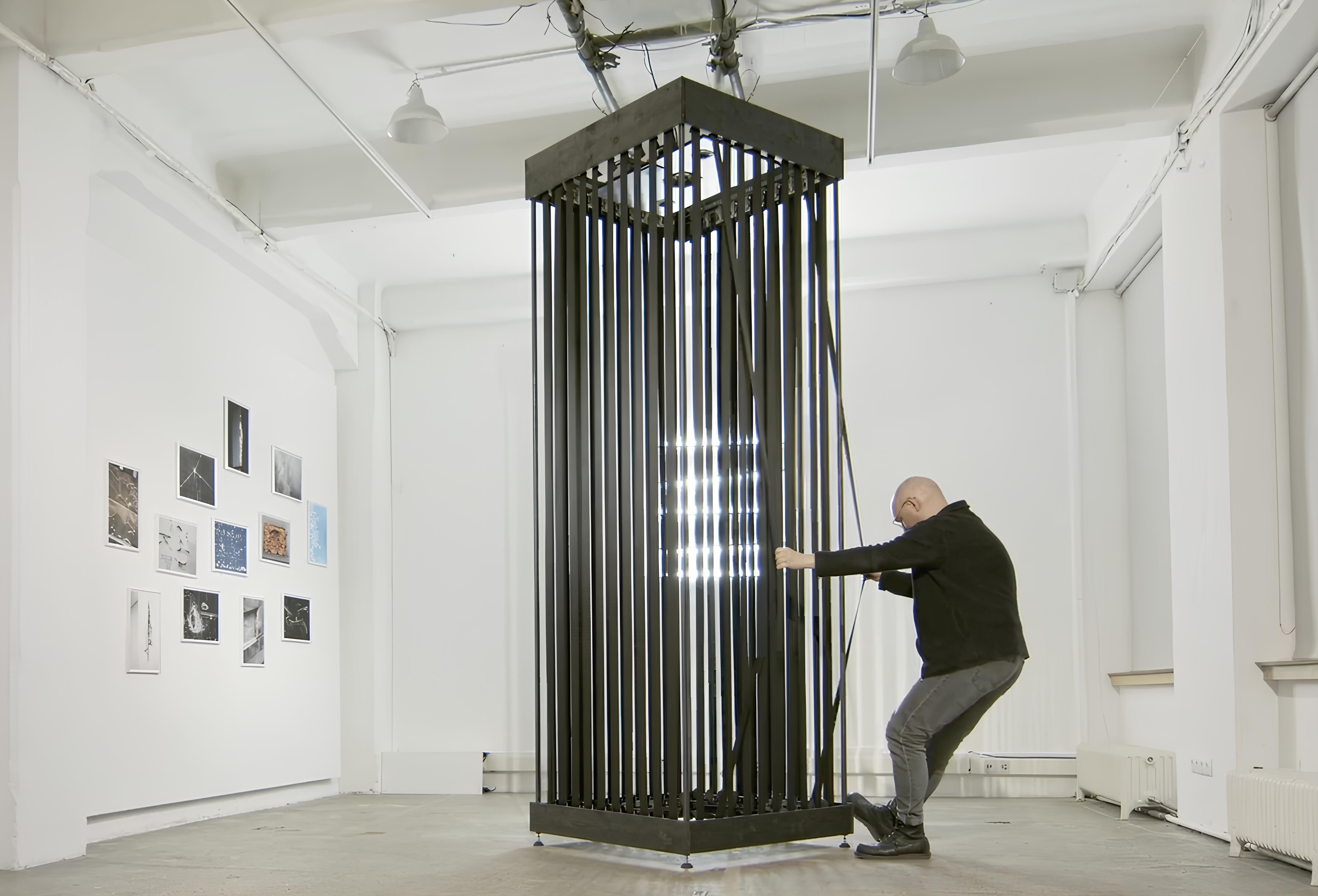
The idea for the installation Spannung, on the other hand, came to me many years ago, at a time when I was exploring the use of elasticity and the measurement of pressure and weight. I had a vision of a large installation made of black belts, stretching from floor to ceiling in a factory-like space, designed to look like a monolithic black block. The installation was intended to be stable enough for someone to lean into it with their full body weight or pull on it to produce nuanced sounds. I also liked the idea that several people could interact with it at the same time. I carried the idea around with me for a long time and then realised it many years later in Vienna, mainly because the exhibition space matched my vision exactly, and I now had the technical skills and tools to bring it to life.
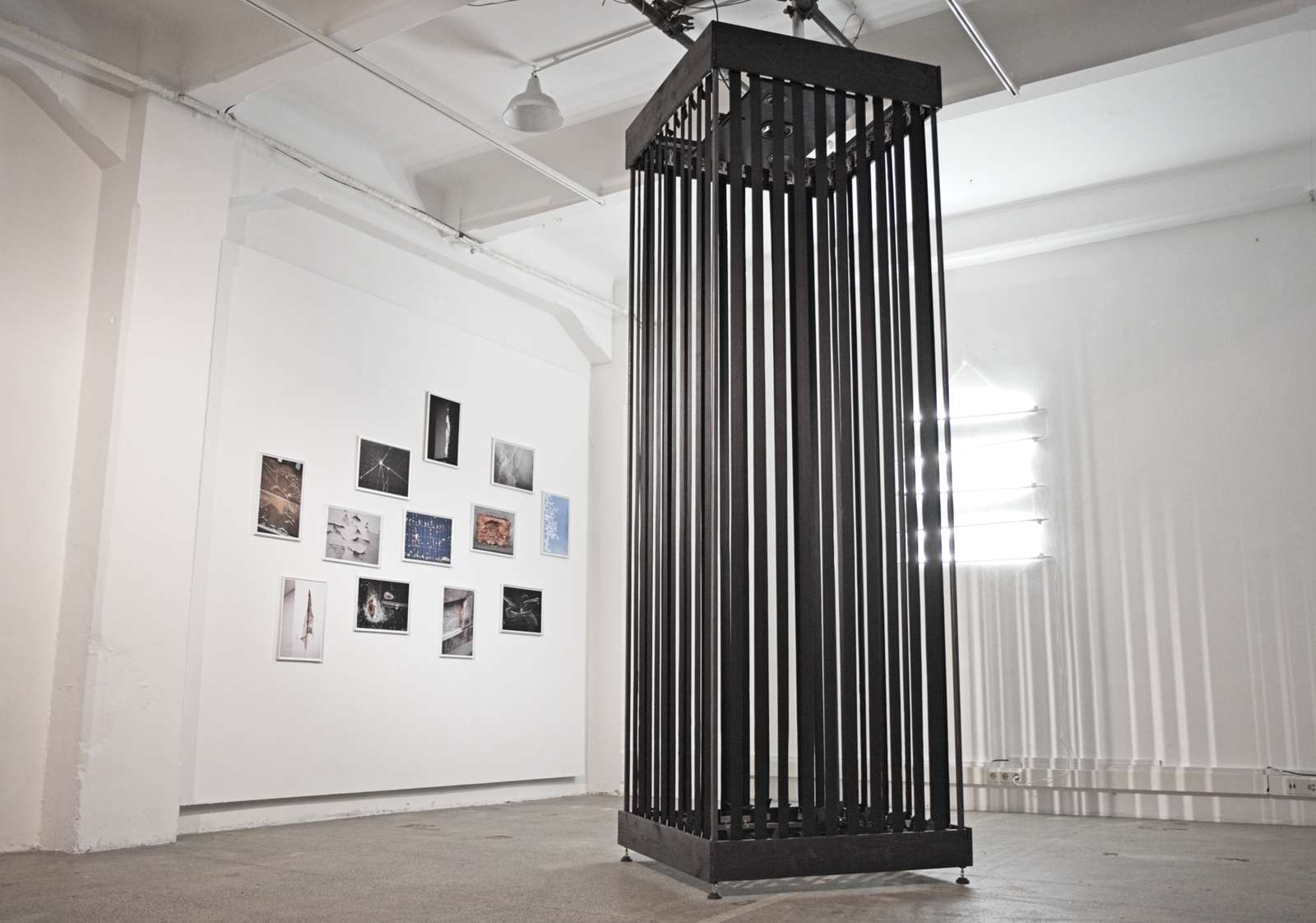
Spannung as exhibited.
Essential tools
Are there any tools or instruments which you couldn’t do without?
For me, it’s definitely the computer. Of course, I love all the instruments in my studio, and all the tools in my workshop too, and I really can’t imagine living without them. But the most important piece of kit for me is the computer. It’s always running; it’s my research tool, my archive, my music studio and my composition partner. With the Welle software, it can even serve as my setup for live performances.
Getting started
Finally, do you have any advice for people interested in building their own sound devices and tangible interfaces?
It’s easier than it looks at first glance. There are so many workshops, tutorials and online courses where you can learn pretty much everything you need to know. Hardware, tools, electronics and starter kits are now available at really affordable prices, both new and second-hand. My tip would be to simply start with a tiny idea that pops into your head and then just put it into practice. You learn the most along the way, searching for solutions with a clear goal in mind, and you’ll feel really motivated and proud once you’ve managed it. The most important thing is to have fun and enjoy the process.
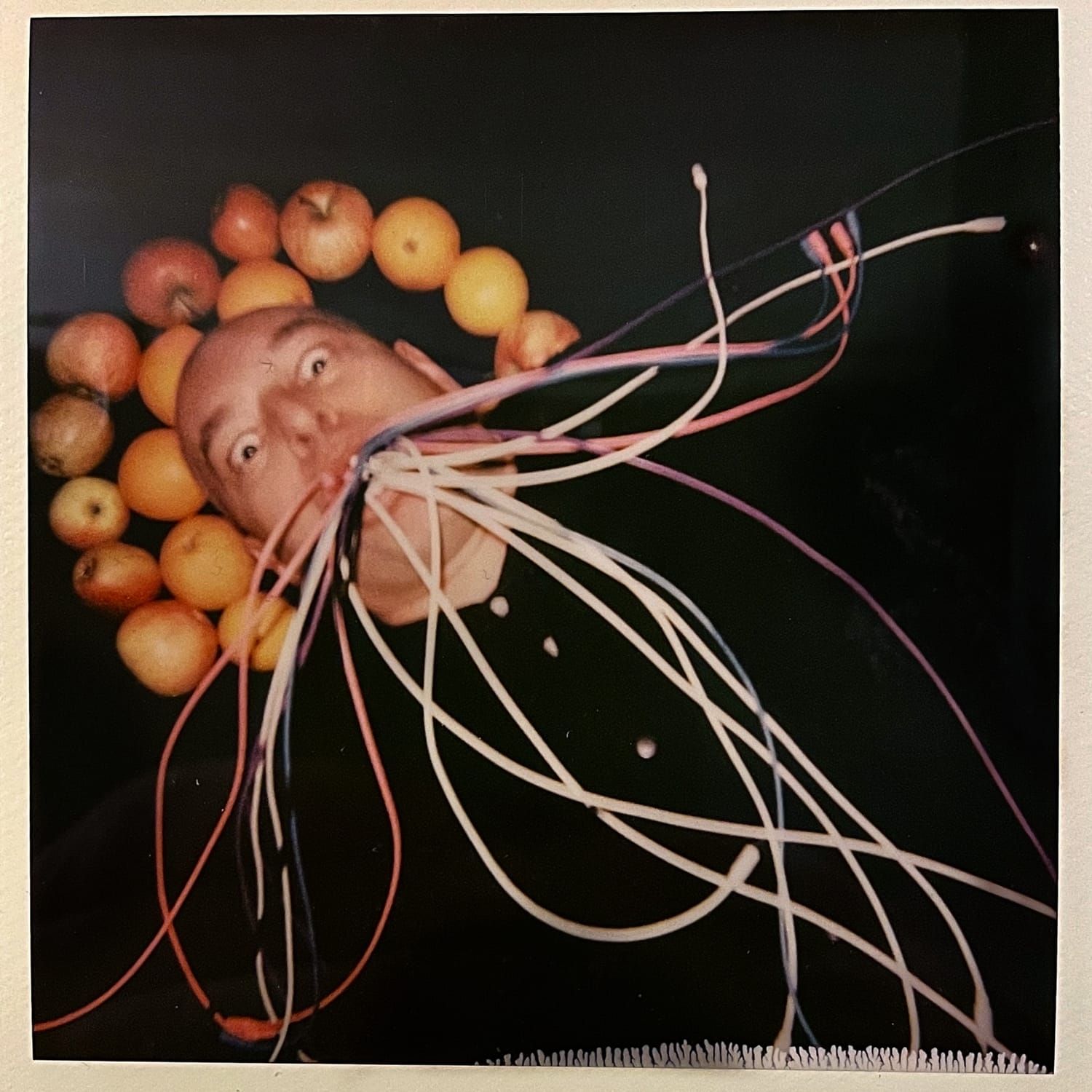
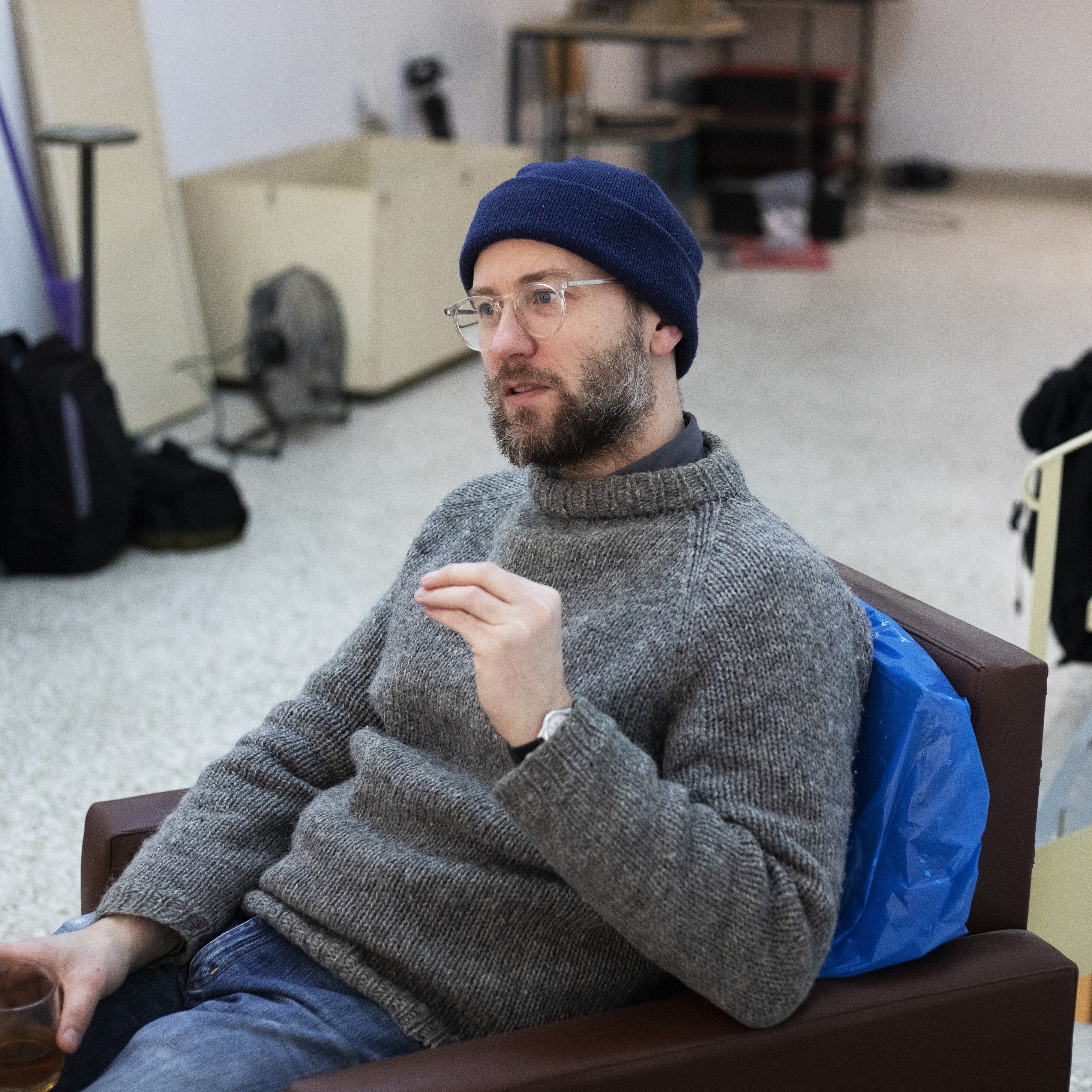
Portrait of Jens Vetter by Elisa Unger
You can see more of Jens Vetter’s work on his website: https://jensvetter.de/.